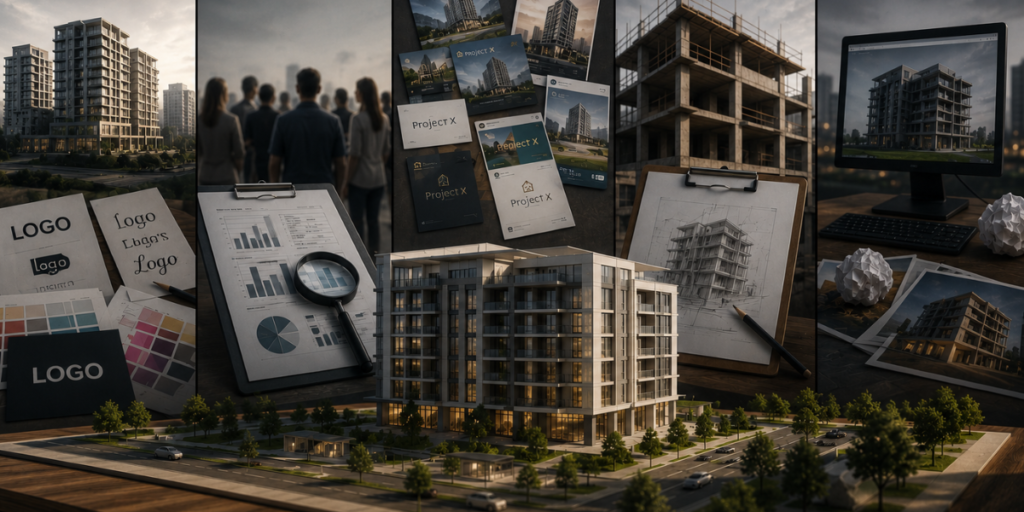
Every developer launching an off-plan project eventually hits the same question: where should the rendering budget go first, the building’s exterior or its interiors? It sounds like a small production decision, but it shapes how buyers perceive the project long before a single unit is handed over. The honest answer is that both play different roles in the sales journey, and knowing when each one matters most can make the difference between a slow launch and a sold-out phase one.
Exteriors Sell the First Impression
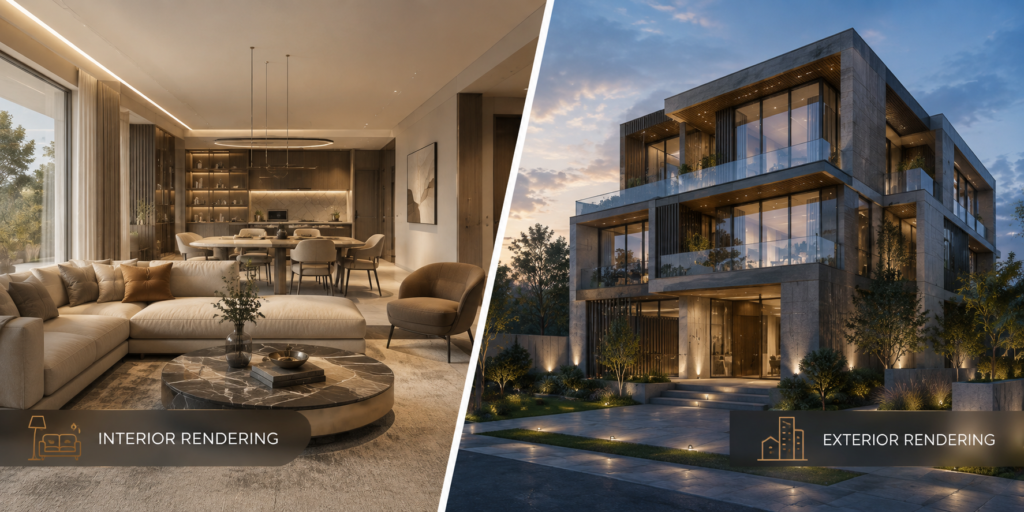
Before a buyer cares about kitchen finishes or ceiling height, they need to believe in the project itself. That’s what exterior renders do. They establish scale, location context, and design ambition in a single image. A striking facade shot on a landing page or brochure cover tells a potential investor that this is a serious, well-planned development, not just another listing.
This is why most marketing campaigns lead with the exterior. It’s the image used in outdoor ads, social media teasers, and the hero banner on the website. For developers working with an architectural 3D rendering saudi arabia team, exteriors are usually the first deliverable requested, simply because they carry the weight of the initial pitch. Buyers browsing dozens of projects online decide within seconds whether something is worth a second look, and the exterior is what earns that second look.
Interiors Close the Deal
Once a buyer is interested, the conversation shifts. They stop asking “is this a good project” and start asking “can I see myself living here.” That’s where interior renders take over. Kitchen layouts, living room proportions, natural light, material choices, these details answer the practical questions that exteriors simply can’t.
Sales teams know this well. During site visits, follow-up calls, and one-on-one presentations, interior visuals do most of the persuading. A buyer comparing two similar developments will often choose the one where they can picture their own furniture in the space. This emotional connection is harder to build with exterior shots alone, which is why interior renders tend to carry more weight later in the sales funnel, closer to the actual decision point.
Why the Split Matters More Than the Choice
Framing this as an either-or question misses how pre-sales marketing actually works. Exteriors and interiors serve different stages of the same buyer journey. Exteriors generate interest and build trust in the project. Interiors convert that interest into a signed reservation. Skipping either one creates a gap somewhere in the funnel, whether that’s low click-through rates because the exterior isn’t compelling, or high drop-off after inquiry because buyers can’t visualize the actual living experience.
Budget allocation should reflect this. Early-stage marketing, teasers, launch campaigns, outdoor advertising, deserves strong exterior work. As the campaign matures and moves into brochures, sales lounges, and direct buyer conversations, interior renders need equal attention. Developers who treat rendering as a one-time deliverable instead of a phased asset often end up reshooting or commissioning rushed interior work midway through a launch, which shows in the final quality.
Getting the Balance Right
A practical approach is to plan both from the start, even if delivery is staggered. Confirm the hero exterior angles first since these drive early marketing, but lock in unit layouts and interior direction early enough that the rendering team isn’t working under last-minute pressure once sales momentum builds. Developers who invest in 3d exterior rendering services for the launch phase and pair it with detailed 3d interior design rendering services once floor plans are finalized tend to see a smoother transition from interest to reservation, because the visuals match the pace of the sales process instead of lagging behind it.
At the end of the day, this isn’t really a competition between exteriors and interiors. It’s about sequencing the right visuals to match how buyers actually make decisions, curiosity first, commitment second.