Walk through any property expo and you’ll notice the same pattern. A handful of booths pull crowds while the rest blend into the background, even when the underlying projects are comparable in quality and price. More often than not, the difference isn’t the product. It’s the branding. Developers spend months perfecting floor plans and finishes but treat brand identity as an afterthought, something to sort out once the marketing team needs a logo for the brochure. By then, it’s usually too late to fix without slowing the launch down.
Branding in real estate isn’t just visual polish. It’s what tells a buyer, often someone who will never set foot on the actual site before signing, that this project is worth their trust and their money. Here are five mistakes that quietly undermine that trust before a single unit is sold.
1. Treating Brand Identity as a Design Task, Not a Strategy
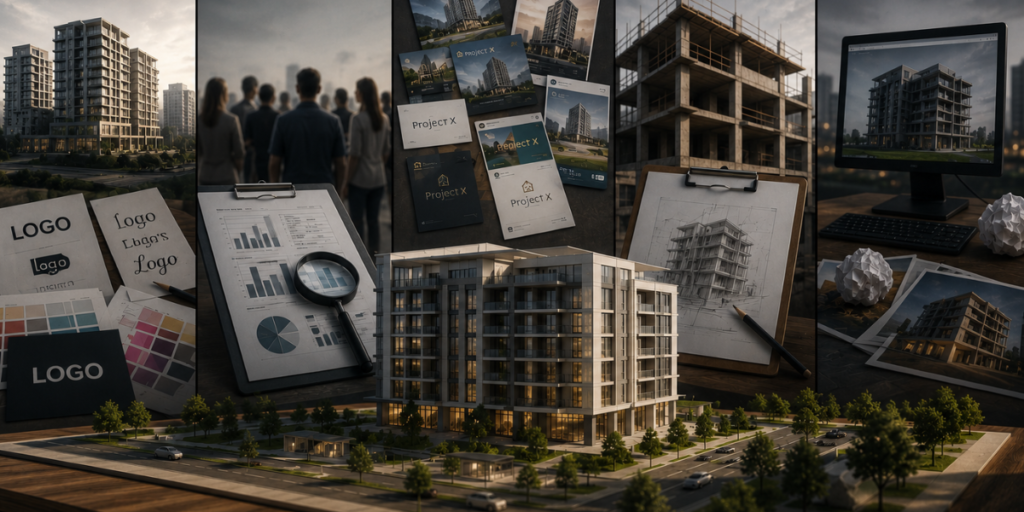
Many developers hand off branding to whoever’s available: an in-house designer, a freelancer, or worse, the same agency doing the building’s structural drawings. The result is a logo and color palette that look fine in isolation but don’t say anything about who the project is for or what it stands for. A luxury waterfront development and a mid-market family community shouldn’t share the same visual language, yet this happens constantly because branding gets treated as decoration instead of positioning. Before any creative work starts, developers need clarity on who they’re selling to and what emotional promise the project is making. Everything else, the name, the palette, the tone of the copy, should flow from that.
2. Skipping Visualization Until Late in the Process
It’s common for developers to wait until construction is well underway before commissioning any renders, assuming marketing can wait until there’s “something real to show.” This backfires. Buyers today expect to see a project long before groundbreaking, and early visuals are often what secures presales that fund the next phase of construction. Partnering with a 3d rendering company early in the timeline means marketing materials, ranging from static images to full walkthroughs, can be ready the moment the sales office opens, not months after competitors have already captured buyer attention.
3. Inconsistent Visuals Across Marketing Channels
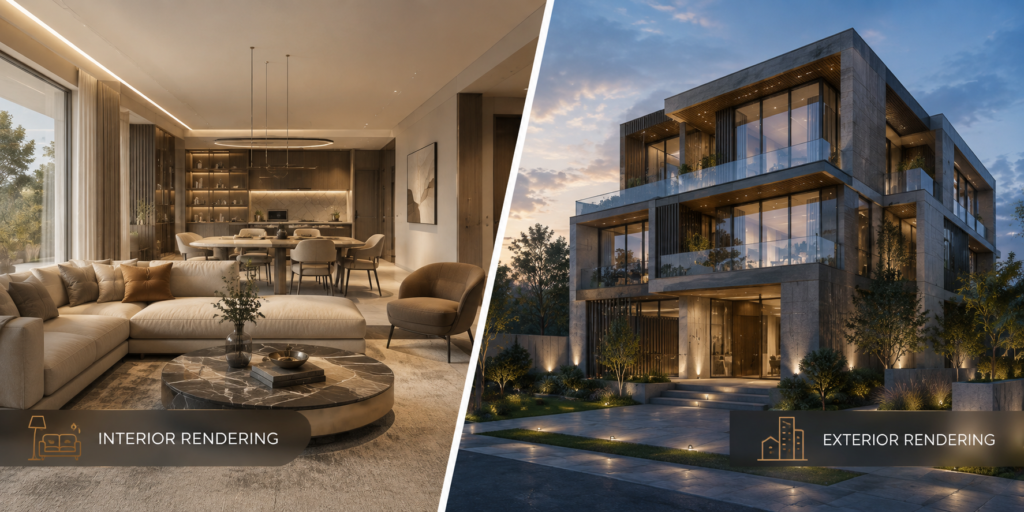
A project might have a beautifully rendered brochure but a website that looks like it was built by a different company entirely, or social media posts using outdated floor plans that don’t match the final design. This inconsistency does real damage. Buyers doing due diligence across multiple platforms notice when the story doesn’t line up, and it raises doubts about how carefully the project itself is being managed. Every touchpoint, print, digital, in-person, needs to draw from the same visual asset library. This is one reason developers increasingly invest in comprehensive 3d exterior rendering services upfront, so every channel pulls from a consistent, high-quality set of images rather than a patchwork of renders commissioned at different times from different vendors.
4. Underestimating the Emotional Side of Interiors
Exterior shots get a project noticed, but branding mistakes often show up once buyers start looking closer. A common one is neglecting interior visualization until late, treating it as a lower priority than the facade. But interiors are where buyers form an emotional attachment. They want to picture their morning coffee in that kitchen, their kids doing homework in that living room. Skimping on 3d interior rendering, or delivering generic, poorly lit visuals, weakens that connection at exactly the moment it matters most. Interiors aren’t a secondary deliverable; they’re where the brand promise becomes personal.
5. Ignoring the Buyer’s Need to “Walk Through” Before Committing
Static images build interest, but they don’t fully answer the question every serious buyer eventually asks: what does it actually feel like to move through this space? Developers who skip this step lose buyers to competitors offering a more immersive experience, especially international investors who can’t easily visit in person. A 3d virtual tour rendering gives buyers a sense of flow and scale that photos alone can’t communicate, and it signals that the developer is confident enough in the design to let people explore it freely rather than curating a handful of flattering angles. Branding isn’t just about how a project looks in a single image; it’s about how convincingly that image translates into a lived experience.
Getting Branding Right From the Start
None of these mistakes are really about creative execution. They’re about sequencing and consistency. Developers who define their brand strategy early, invest in visualization before it’s urgently needed, and keep every channel aligned tend to launch with far more momentum than those scrambling to patch gaps after the fact. In a market where buyers are comparing dozens of projects from a screen, brand trust is often built or lost before anyone picks up the phone.
Getting this right doesn’t require a bigger budget. It requires treating branding as part of the development plan from day one, not a marketing task squeezed in before launch.